


husky leadership
my leadership experience @ uw
Hi there! My name is Franchesca Nicole Lazaro. I am an aspiring product manager who is passionate about technology, particularly in the creative technology and digital preservation sectors. I'm in my fourth year at the University of Washington Bothell, pursuing a double degree in Applied Computing and Business Administration and a minor in Gender, Women, & Sexuality Studies.

❝ Be grateful for what you already have while you pursue your goals. ❞
| x | core values |
|---|---|
| authenticity | This means not feeling pressured to follow every trend or do things just because everyone else is doing them. I want to make sure that when I like something, whether it’s a hobby, a style, or even an opinion, it’s because I genuinely like it, not because I feel like I have to. I don’t want to waste time comparing myself to others; I want to be confident in who I am. |
| dreaming | I’ve been a daydreamer ever since middle school. It’s my safe space when bored, anxious, or stressed. It also helps me imagine what’s possible for my future and who I could become. Dreaming excites me to think about what’s next for me and what I could accomplish! |
| discipline | I remember in 6th grade when I struggled with math and decided to study during lunch and before school. It was hard, but it paid off when I started doing better and even won an award. That experience taught me that if I stay consistent and put in the effort, I can improve, even if it takes time. Discipline helps me stick with my goals, even when it’s tough. What's important is consistency! |
| grace | I don’t want to be someone who holds grudges or tries to get back at people when I’m hurt. I believe in giving people the benefit of the doubt and forgiving, even if it’s hard. My faith plays a big part in this, but I also just think it shows strength to be kind when you could be petty. |
| faith | My faith gives me hope even when things are really hard. It helps me remember that everything happens for a reason, even if I don’t understand it right now. I believe that life has a bigger purpose, and knowing that helps me stay positive during challenging times. |








my why
What: I am always thinking about what I will regret in the future and how I can make the most of it. I ask myself, am I satisfied with the person I am today? If I were to die tomorrow, would I be fully comfortable and accepting of what I've done, who I am, who I know, the relationships I've built, and the "me" that I have cultivated? how:
I do this by continuously evaluating my goals and priorities. I write down everything I want to accomplish and label everything from what I most want to do to what I least want to do. Then, I create subprojects and subtasks to meet my goals. I do this for what I want to accomplish this year, in the next 3 to 5 years, and then in my lifetime. why:
I don't want to leave this Earth knowing I could have done more if I didn't try my best. There will be choices where I didn't see the consequence or wasn't aware of it then so that I couldn't have prevented it. But I want to approach each day knowing I have done my best to succeed according to my goals. I want to live each day authentically AS ME.

| x | unique leadership identities |
|---|---|
| idea explorer | i love creating creative ideas and finding new ways to solve problems! i get excited about improving processes, thinking outside the box, and seeing how little changes can make a big difference. |
| curious learner | i'm naturally curious and always eager to learn more. i love digging into new topics, asking questions, figuring out how things work, and then applying that knowledge to real-life situations. |
| hardworking go-getter | when I commit to something, i HAVE to plan it out, divide it into deliverables, and FINISH it. i take my commitments very seriously and feel useless if I’m not being productive or working towards my goals. |
| big-picture thinker | I like to zoom out and see the bigger picture, especially when understanding perspectives from different cultures! It’s super fun to me, and I love to think about how other parts of the world approach a problem. Thinking globally helps me make better decisions and connect with people from different backgrounds. |

future goals
I envision myself leading teams and developing innovative products that prioritize inclusivity, accessibility, and global impact. I want to use my leadership to create technology that meets user needs and challenges systemic barriers in the industry. Through my involvement in the Husky Leadership Certificate and Foster’s Leadership Academy, I am refining my ability to lead with empathy and effectiveness.As an anti-racist leader, I will advocate for fair hiring practices, diverse representation in product development, and ethical technology solutions that serve underrepresented communities. I aim to use my skills as an Idea Explorer, Hardworking Go-Getter, Curious Learner, and Big-Picture Thinker to drive meaningful change in the tech industry and beyond. By pushing boundaries and inspiring others to live authentically, I hope to leave a lasting impact—both in my work and in the people I lead.
my definition of leadership
Leadership is about collaboration, empowerment, and creating a space where others feel valued and heard. It is not about commanding or controlling but about fostering a team environment where people feel supported, motivated, and invested in a shared goal. A great leader actively listens facilitates conversations and helps others reach their full potential.My leadership philosophy is rooted in equity and inclusion, ensuring that everyone has the opportunity to contribute and thrive. Leadership means meeting people where they are and working together to elevate each other based on individual aspirations and the team's collective success. Authentic leadership is about uplifting others and ensuring that every voice is heard and valued.
my leadership evolution

high school
I saw leadership through a military or political lens, influenced by history classes that often portrayed leaders as authoritative figures like Julius Caesar, generals, and rulers. At the time, I believed leadership was about being the one in charge, making tough calls, and commanding respect through dominance. The idea that leadership was a skill to be studied or practiced never occurred to me. Additionally, I noticed that most widely recognized leaders were men, which was discouraging and limiting regarding representation.

freshman year of college
My first exposure to leadership in practice was through group projects and hackathons. Initially, I either took on all the work myself or dictated tasks to others, an approach that felt more like micromanaging than leading. Through courses like Product Management Lab and hands-on experiences, I realized that effective leadership isn’t about control, but facilitating teamwork, fostering collaboration, and ensuring every team member has a voice.

senior year of college
My current definition of leadership is grounded in collaboration and support. Leadership means creating a culture of mutual respect, where people feel comfortable sharing their ideas and where their contributions are recognized. I no longer see leadership as being about power or dominance, but rather about mentorship, encouragement, and shared success.
❝ Like fighting an addiction, being an antiracist requires persistent self-awareness, constant self-criticism, and regular self-examination.. ❞
anti-racism and leadership
Anti-racism plays a crucial role in my leadership philosophy. Leadership is about ensuring everyone has a fair and equitable opportunity to contribute. This means:
Actively addressing bias and inequities in group dynamics.
Ensuring diverse voices are included in decision-making.
Creating an environment where people from all backgrounds feel supported and empowered.
As a leader, I recognize that systemic barriers exist, and I strive to amplify marginalized voices, create inclusive spaces, and challenge exclusionary practices. Leadership is about responsibility, and part of that responsibility is ensuring that the spaces I lead are truly inclusive and equitable.

my examples of work (click on images to see the work)

from concept to community
diversity & inclusivity programmer for the campus events board

Preservation in the Digital Age
product manager for preservation project

social entrepreneurship abroad
uw ambassador for study abroad india
from concept to community
big-picture thinker
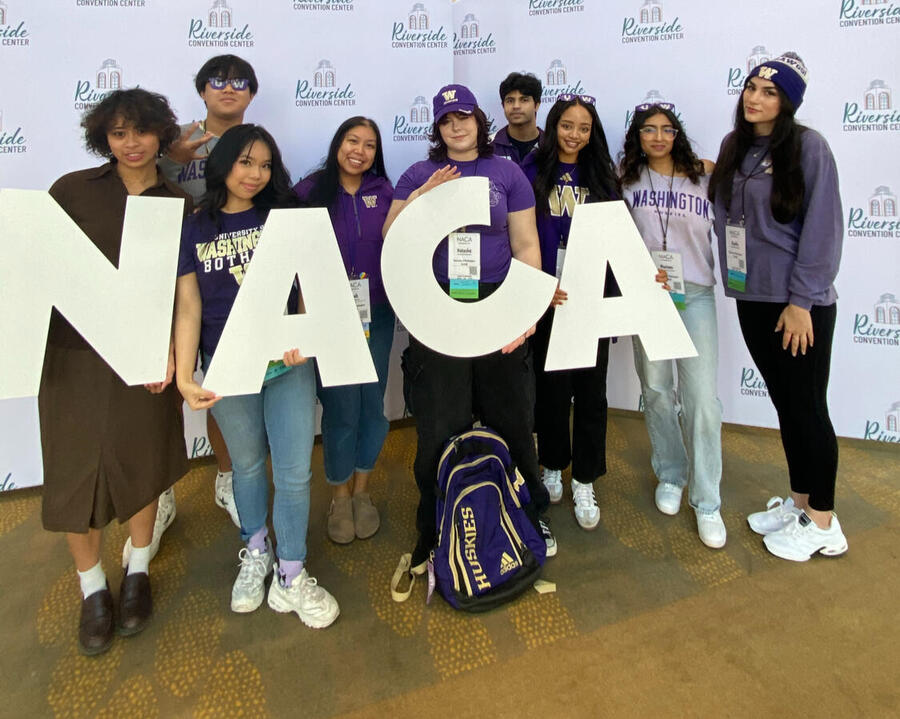
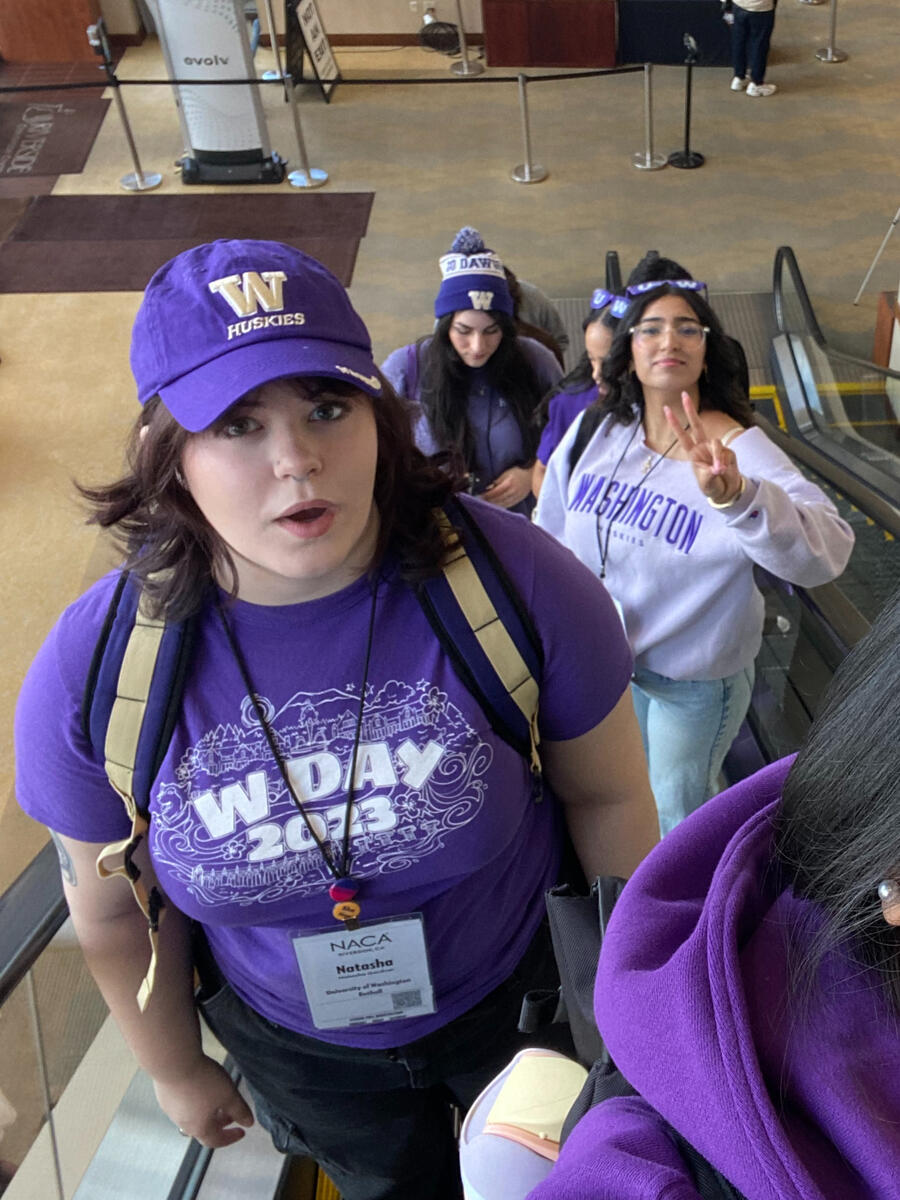
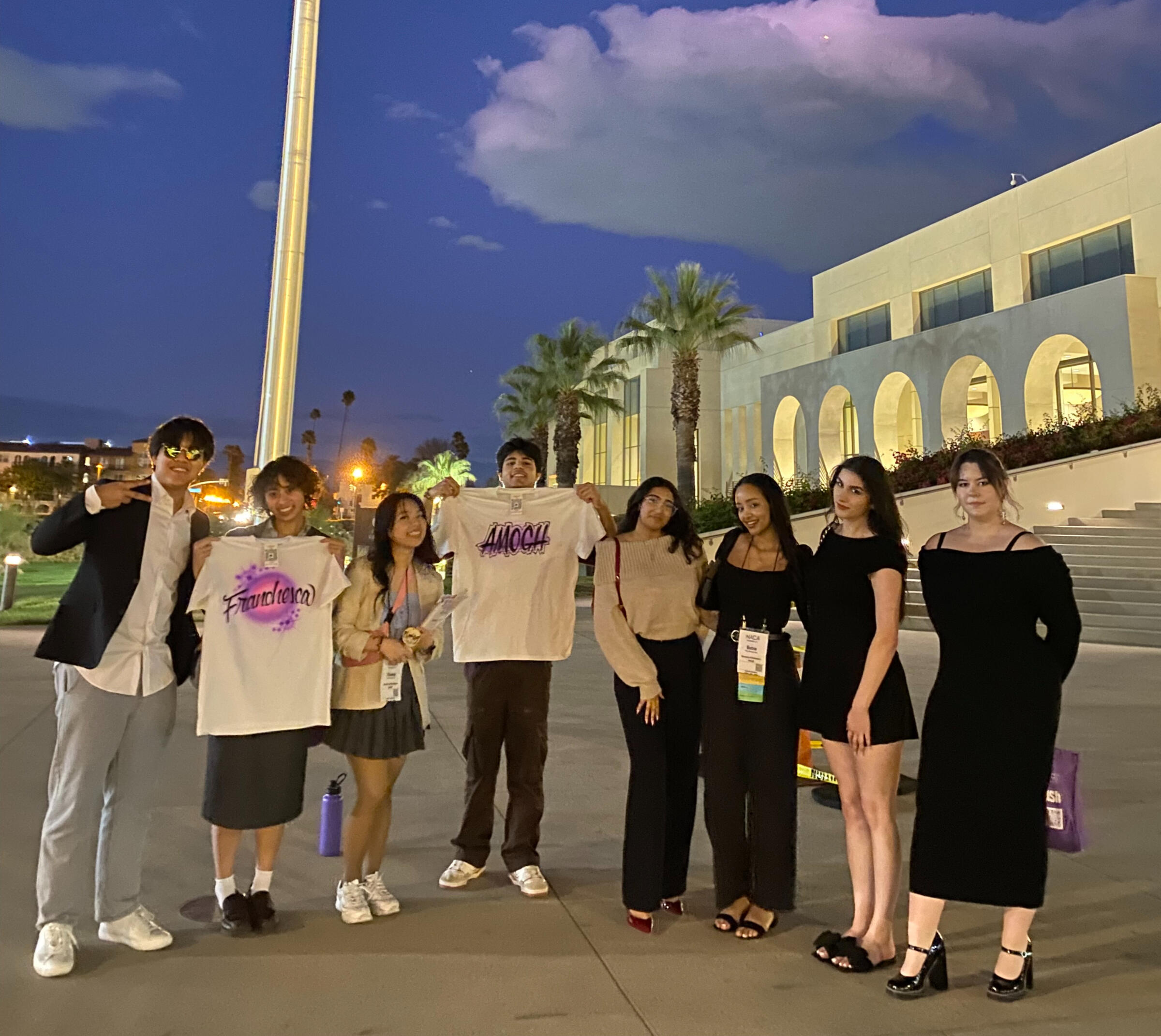
the campus events board team at the national association for campus activities (naca) annual show
overview of work Working as a Diversity and Inclusion Campus Events Programmer has been an inspiring and fulfilling experience! I had the opportunity to practically implement concepts learned in my Business 300 classes by hosting events that honored various points of view and fostered a sense of community on campus. I collaborated with students, faculty, and staff to develop an inclusive environment where everyone felt heard and valued. Having students bond over events gave me an idea of how crucial it is to foster inclusion through action. personal importance This work means so much to my heart because I've always found that diversity makes us stronger. Having grown up in a multicultural (Filipino mixed with other ethnic backgrounds) community, I saw firsthand how much we can learn from one another if we are open to different backgrounds and stories. Hosting these events allowed me to facilitate empathy building and foster understanding among students. We unite people and create an inclusive campus, which feels incredibly fulfilling.
❝ All the diversity, all the charm, and all the beauty of life are made up of light and shade. ❞
tasks accomplished
Organized and coordinated several campus events aimed at diversity and inclusion.
Worked with various student groups, faculty, and visiting speakers to develop engaging content.
Handled event details such as venue bookings, budgets, and publicity.
Created materials for events and promoted them via social media.
Gathered feedback from attendees to improve future events.
| x | leadership competencies |
|---|---|
| collaboration | Working with various student groups taught me so many things about collaboration. I had to listen attentively to everyone’s thoughts and find ways to combine different perspectives into one cohesive idea. One of the best examples was the Native American Night, where we partnered with local Native American speakers to discuss their experiences. The event was an enormous success because everybody had the chance to feel heard, and we worked together as a genuine team. |
| Empathy | Organizing events emphasizing inclusion allowed me to exercise empathy on an entirely different level. I went out of my way to listen to people's stories and use their feedback to shape our events. After one panel, a student told us how much it meant to feel seen on campus finally, and that moment stuck with me. It proved how powerful it is to build spaces where people feel heard and valued. |
| Organizational Behavior | Managing event committees allowed me to understand group dynamics better. Valuing every team member's strengths and giving positive reinforcement enormously affected how engaged everybody was. By building trust and encouraging open dialogue, we managed to stay on track and work well together. |
| Verbal Communication | Public speaking used to scare me, but this role helped me get more comfortable. I had to present ideas to campus leadership, introduce speakers, and host events. I learned how to break down complex concepts about diversity into clear, relatable messages that kept audiences engaged. |
| Initiative | I learned the power of initiative when I pitched the idea for Bookathon- a book-related “con” event. I independently developed the concept, presented it to the team and my manager, and coordinated the event. Unfortunately, the event got postponed due to weather issues, but I appreciate that my team keeps voting for the idea to happen! |
| Appropriate Interactions | As a Campus Events Programmer, professionalism is essential in our interactions with students, faculty, and guests. Whether handing out food, managing an activity table, or coordinating a guest speaker, we are staff members and volunteers, not just students attending an event. This means maintaining a positive and professional attitude—inviting people in, providing assistance, and ensuring that all attendees have an engaging experience. Just like in customer service, our role requires us to be approachable, respectful, and committed to delivering a smooth and welcoming event environment. Setting a good example includes small but impactful actions like not cutting in line, avoiding negative conversations, and fostering a welcoming atmosphere for everyone. |
| Diversity | Diversity is central to my role and influences how I design and plan events. When brainstorming event ideas, I prioritize incorporating perspectives that reflect a wide range of backgrounds, including ethnicity, sexuality, veteran status, first-generation college students, low-income students, and individuals with disabilities. Ensuring representation in every aspect of an event—from speakers and panelists to activities and topics—allows for meaningful engagement and deeper learning opportunities for all students. |
| Inclusion | While diversity focuses on representation, inclusion ensures active participation. My role requires intentional efforts to create welcoming environments where students feel encouraged to engage. This means structuring activities that foster interaction, reaching out to underrepresented student groups, and ensuring that marketing materials explicitly invite diverse participation. By actively seeking and welcoming students from all backgrounds, we create richer experiences where individuals can connect, learn from each other, and feel a sense of belonging. |
| Personal Contributions | Although I work within a team, I recognize the importance of making meaningful individual contributions. Instead of relying on others to carry the workload, I take initiative to support my colleagues, provide ideas, and execute event tasks efficiently. Contributing isn’t just about completing assignments—it’s about stepping up to help where needed, identifying gaps in the planning process, and being an engaged team player. I ensure that I am both proactive in my responsibilities and supportive of my co-workers so that our events run smoothly and our team operates effectively. |
| Receiving Feedback | Feedback is an essential part of personal and professional growth. In this role, I have received feedback from my manager and co-chair on different aspects of my performance. Through this, I have learned the importance of standing up for myself when feedback is based on misunderstandings or lacks clarity, as well as advocating for my boundaries as both a student and an employee. At the same time, I have recognized the value of constructive criticism and used it to improve my ability to plan events, communicate with my team, and support the organization’s mission. Learning to navigate these conversations has strengthened my confidence and ability to engage in professional discussions about performance and expectations. |
| Self-Development | While I am passionate about education and creating enjoyable experiences for students, I recognize that my long-term career interests lie outside of event planning and higher education. My aspirations are more aligned with product management than program management, so I have been intentional about identifying transferable skills from this role that will support my career growth. Through event planning, I have gained valuable experience in project coordination, stakeholder engagement, and problem-solving—skills that will be relevant no matter where my career path takes me. This mindset has helped me make the most of this opportunity while preparing for my future endeavors. |



Lessons Learned and Future Goals
This experience taught me that you work toward inclusion daily. I learned that listening, being open, and taking action are essential to building an inclusive community. Moving forward, I'd like to continue applying these concepts in leadership roles, whether here on campus or later in my professional career. I'm confident that the skills I gained as an events programmer will help me build positive, inclusive spaces wherever I go.
preservation in the digital age
idea explorer
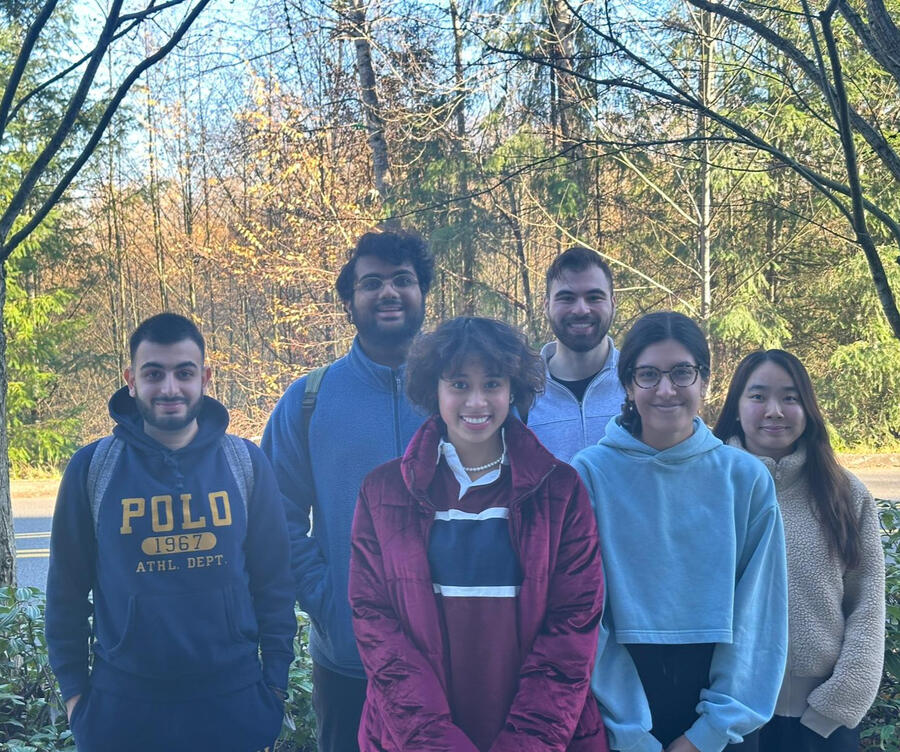
overview of work Darkive started as an idea during my Product Development Lab (BBUS 444) at UWB. I worked with a team to tackle challenges faced by underfunded archives. As the Product Manager and Team Lead, I came up with the idea to simplify metadata creation, which is usually slow and tedious. We built a tool that uses smart automation to speed up the process, making it easier and more affordable for smaller archives. One of our biggest achievements was getting a Letter of Intent (LOI) from an assistant archivist, which showed that our idea had real potential. We also talked to 15 archivists to learn more about their struggles and presented our idea to 10 guest speakers and 3 investors. personal importance This project was really meaningful to me because it combined my interest in history with my passion for technology. I’ve always believed that everyone should have access to tools that help preserve important stories and records, not just big, well-funded organizations. Through this experience, I saw firsthand how limited resources can make it hard for some communities to protect their histories. Knowing that Darkive could make a difference in solving this problem motivated me throughout the project. It also made me realize how technology can be a powerful tool for social good, which is something I want to continue exploring in the future.
❝ How much knowledge had been lost because no one wrote it down? ❞
tasks accomplished
Led a team of five to build the Darkive prototype.
Conducted 15 interviews with archivists to understand their needs.
Secured a Letter of Intent from an Assistant Archivist.
Presented our idea to 10 guest speakers and 3 investors.
Created and tested features for automated metadata generation.
Developed marketing strategies and designed a subscription model. Organized team meetings and delegated tasks effectively.
Researched industry trends to validate product-market fit.
Designed user interface features to enhance accessibility.
Collaborated with a mentor to troubleshoot development challenges.
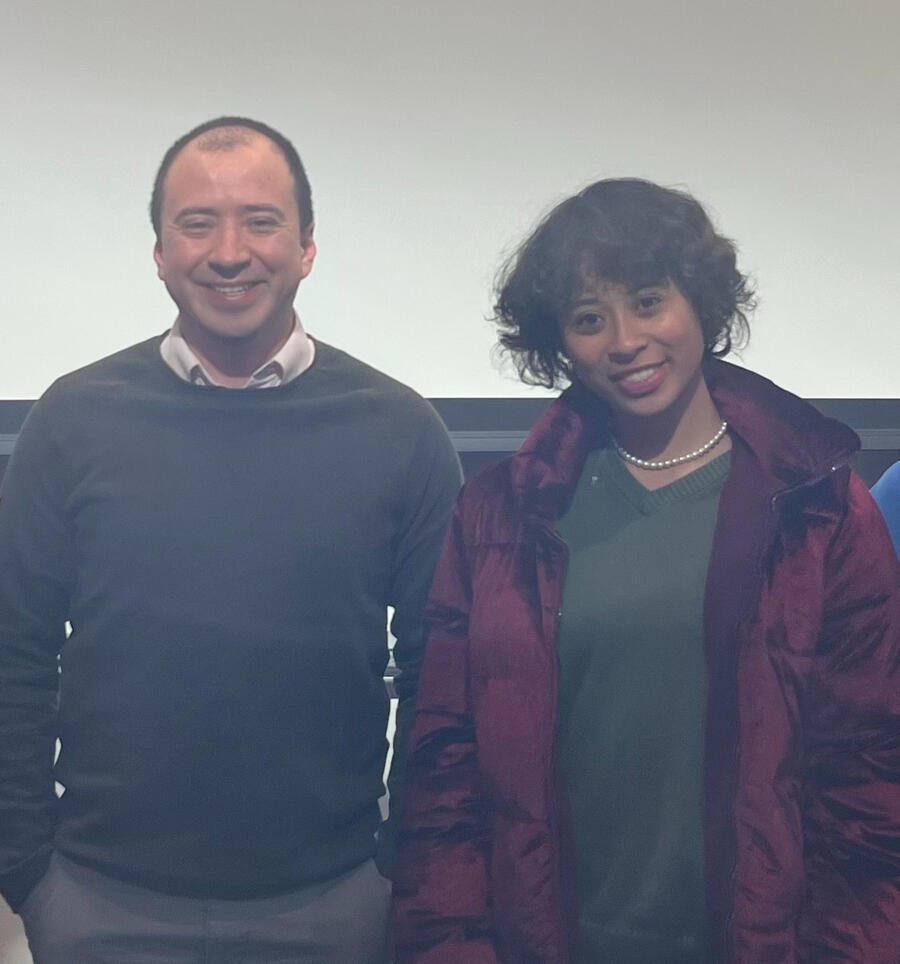

our pitch deck for our start-up - click the image for the full slide show!
| x | leadership competencies |
|---|---|
| idea generation | I enjoyed brainstorming ideas with the team, especially when we developed a subscription model that could make the tool more accessible. Our goal was to create an equitable model that supports smaller archives. We explored various pricing structures and settled on one that offers discounts to underfunded institutions. I realized that generating ideas requires curiosity and a willingness to think outside conventional solutions. I also encouraged team members to contribute ideas without judgment, which led to some of our most creative breakthroughs. |
| research | Conducting interviews gave me valuable insight into archivists’ daily challenges and helped us design a better product. I prepared open-ended questions to gather diverse perspectives on metadata creation. Analyzing the responses, I discovered patterns that highlighted the need for customizable automation features. Additionally, I reviewed academic papers and industry reports to understand best practices. This experience demonstrated that thorough research not only informs product development but also builds empathy for the end user. |
| problem solving | I learned how to break down the complex process of metadata creation and work with my team to come up with a solution that saves time and effort. We started by analyzing the challenges archivists face with manual metadata entry, which often leads to inconsistent and incomplete records. After identifying the core issues, I facilitated brainstorming sessions where we considered different approaches. Ultimately, we decided on an automated suggestion feature. I also tested and refined the tool based on user feedback. Through this process, I realized that problem-solving isn't just about finding quick fixes but requires continuous improvement and learning from mistakes. |
| providing feedback | As a project manager, I learned that giving feedback effectively is just as important as receiving it. My co-manager and I once provided feedback to the development and design team through comments on Figma, marking areas that needed adjustments using capitalization for emphasis. While our intention was to make our suggestions clear and easy to reference, one team member misinterpreted our tone, thinking we were criticizing their work rather than making minor recommendations. This misunderstanding highlighted the importance of delivering feedback in a way that ensures clarity and maintains positive team dynamics. Moving forward, I made a conscious effort to provide feedback in person or with a more considerate tone, ensuring that my team felt supported rather than discouraged. |
| nonverbal communication | Much of our communication took place on Discord, where I would send out announcements, assign tasks, and share important resources. Since we weren’t always speaking face-to-face, I quickly realized how written communication could be misinterpreted without the cues of tone or body language. For example, a simple, direct message might come off as demanding rather than efficient. To address this, I adapted my approach by being more intentional in how I framed my messages—adding context, using emojis or formatting to clarify tone, and ensuring my intent was always transparent. Learning to communicate effectively in a digital space strengthened my ability to lead a remote team and minimize misunderstandings. |
| resiliency | From the start, our idea faced skepticism. We were the only nonprofit in a competition filled with for-profit ventures, and many of our peers, guest speakers, and even our professor dismissed our vision, believing it lacked financial viability. Our professor consistently evaluated us on a for-profit scale rather than considering our nonprofit structure, and we faced strong pressure to pivot our model. Despite this, we remained committed to our mission: providing accessible archival tools rather than prioritizing revenue. Overcoming these challenges required resilience—we had to push forward despite negative feedback, refine our messaging to communicate the value of our approach, and prove that social impact could be just as important as profitability. |
| vision | As the founder of Darkive, I had a clear vision from the start: to make metadata creation more accessible for underfunded archives. However, having a vision wasn’t enough—I had to effectively communicate it in pitches, meetings, and discussions with investors and industry professionals. I worked hard to frame our project in a way that emphasized its broader impact, showing how preserving historical records benefits entire communities. I also had to ensure my team fully understood and aligned with this vision so that every decision we made supported our long-term goal. Through this experience, I realized that vision isn’t just about having an idea—it’s about inspiring others to believe in it, too. |



Lessons Learned and Future Goals
Working on Darkive taught me that leadership is about listening to others, solving problems, and staying adaptable. I learned how crucial it is to get feedback and use it to make improvements. I also saw how strong communication helps when you’re presenting ideas or guiding a team. Moving forward, I want to continue working on projects that use technology to solve social challenges. This experience showed me that with creativity, teamwork, and persistence, it’s possible to make a positive impact in any field.
rule i. Lorem ipsum dolor sit amet, consectetur adipiscing elit, sed do eiusmod tempor incididunt ut labore et dolore magna aliqua. rule ii. Ut enim ad minim veniam, quis nostrud exercitation ullamco laboris nisi ut aliquip ex ea commodo consequat. rule iii. Duis aute irure dolor in reprehenderit in voluptate velit esse cillum dolore eu fugiat nulla pariatur. rule iv. Excepteur sint occaecat cupidatat non proident, sunt in culpa qui officia deserunt mollit anim id est laborum. rule v. Lorem ipsum dolor sit amet, consectetur adipiscing elit, sed do eiusmod tempor incididunt ut labore et dolore magna aliqua.
rule vi. Lorem ipsum dolor sit amet, consectetur adipiscing elit, sed do eiusmod tempor incididunt ut labore et dolore magna aliqua. rule vii. Ut enim ad minim veniam, quis nostrud exercitation ullamco laboris nisi ut aliquip ex ea commodo consequat. rule viii. Duis aute irure dolor in reprehenderit in voluptate velit esse cillum dolore eu fugiat nulla pariatur. rule ix. Excepteur sint occaecat cupidatat non proident, sunt in culpa qui officia deserunt mollit anim id est laborum. rule x. Lorem ipsum dolor sit amet, consectetur adipiscing elit, sed do eiusmod tempor incididunt ut labore et dolore magna aliqua.
| mains | ||
|---|---|---|
| ㅤnameㅤ | relationship | url |
| ㅤnameㅤ | relationship | url |
| ㅤnameㅤ | relationship | url |
| ㅤnameㅤ | relationship | url |
| ㅤnameㅤ | relationship | url |
| ㅤnameㅤ | relationship | url |
| exclusives | ||
|---|---|---|
| ㅤnameㅤ | relationship | url |
| ㅤnameㅤ | relationship | url |
| ㅤnameㅤ | relationship | url |
| ㅤnameㅤ | relationship | url |
| ㅤnameㅤ | relationship | url |
| ㅤnameㅤ | relationship | url |
social entrepreneurship abroad
curious learner
This blog post, co-authored with my study abroad group, showcases our collective research and reflections on HelpAge India’s impactful programs. It highlights how teamwork and collaboration contribute to meaningful social change. click on it to view more!
overview of work During my study abroad program in India, I had the opportunity to collaborate with fellow students to explore how social entrepreneurship tackles global challenges. Our focus was HelpAge India, a nonprofit supporting elderly individuals through healthcare, livelihood programs, and advocacy. Together, we researched, visited HelpAge India facilities, and discussed with staff and beneficiaries to better understand the organization’s impact. Our ultimate goal was to analyze how social entrepreneurship can drive sustainable change and document our insights in a group blog post. This experience exposed me to real-world social impact strategies, reinforced the power of teamwork in problem-solving, and deepened my understanding of global aging issues. personal importance Working with my study abroad group on this project strengthened my belief in the power of collective action to solve social challenges. This experience aligned with my passion for social entrepreneurship and drive to develop sustainable solutions for marginalized communities. Engaging with HelpAge India allowed me to see how teamwork fuels problem-solving and innovation. Through group discussions, shared research, and on-site visits, I gained a deeper appreciation of the complexities of elder welfare and the role of social enterprises in creating systemic change. Our collaboration helped me recognize the importance of community-driven solutions in tackling aging-related challenges, making this experience both personally meaningful and professionally enriching. Working within a diverse team also strengthened my ability to collaborate effectively, reinforcing my commitment to ethical, impactful change.
❝ “India shaped my mind, anchored my identity, influenced my beliefs, and made me who I am.. ❞
tasks accomplished
Partnered with a team of students to research and analyze HelpAge India’s programs, including mobile healthcare, elder advocacy, and livelihood support.
Conducted site visits to HelpAge India facilities to gain firsthand insights into their initiatives and impact.
Co-authored a blog post with my group, synthesizing our research, experiences, and reflections on how HelpAge India empowers elderly populations.
Engaged in team discussions to examine the connection between social entrepreneurship and elder welfare, identifying key takeaways for future application.
Presented our findings to peers, emphasizing the role of social entrepreneurship in addressing global aging challenges.
Lessons Learned and Future Goals
This experience reinforced the significance of collaboration, adaptability, and ethical leadership in addressing social challenges. Working with HelpAge India demonstrated how social entrepreneurship can create a lasting impact, and the leadership competencies I developed, such as teamwork, cross-cultural communication, and problem-solving, have already influenced my academic and professional pursuits. I now approach group projects more strategically and inclusively, ensuring that diverse perspectives are valued. My understanding of ethical decision-making and social responsibility will continue to guide my future endeavors in nonprofit or mission-driven business. Moving forward, I plan to apply these leadership skills in roles requiring cross-sector collaboration, critical thinking, and navigating complex global issues. This experience has solidified my commitment to using leadership as a social good tool and equipped me with the skills needed to drive meaningful change in my future career.